
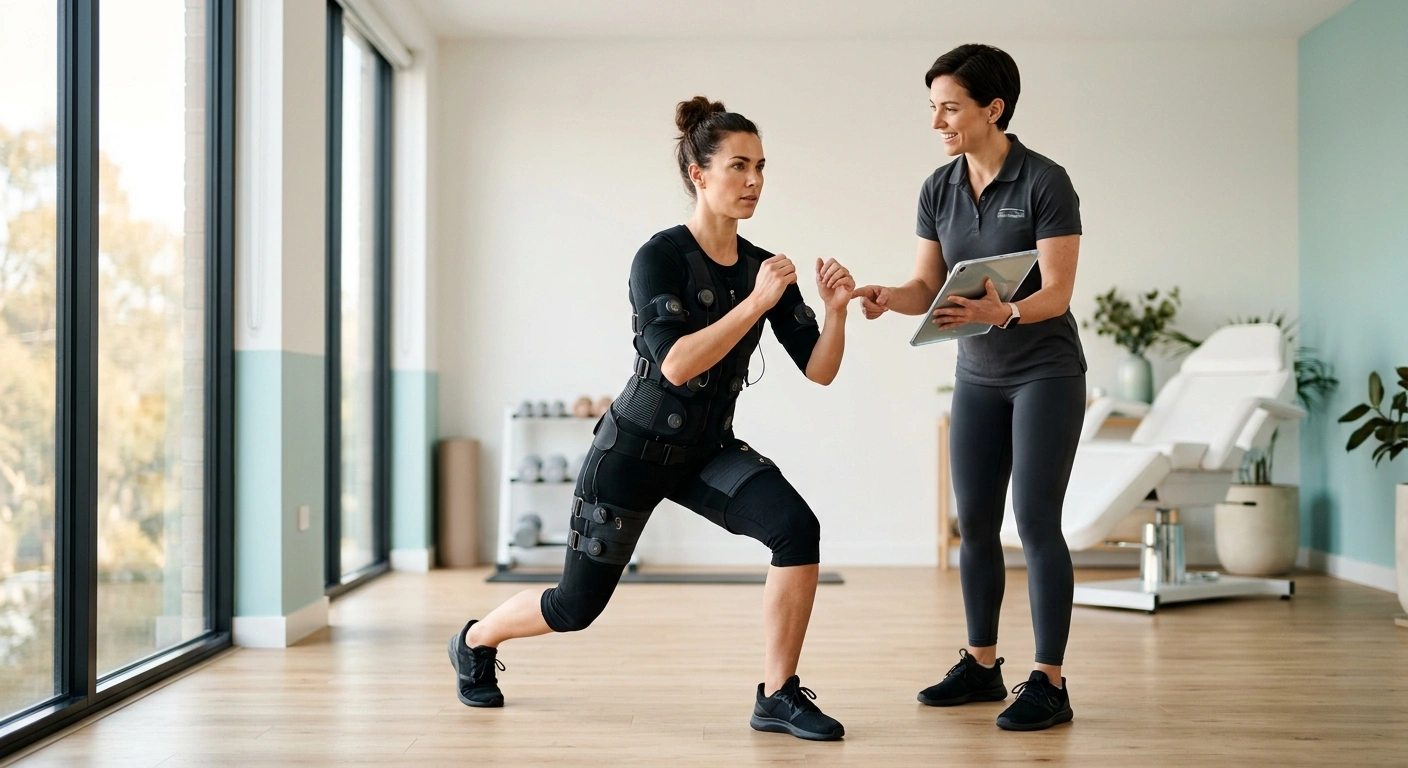
If you’ve scrolled past adverts for 20-minute workouts that promise the results of a 90-minute gym session, you’ve probably wondered whether it’s too good to be true. It isn’t. The real EMS training benefits come down to one thing: electrical impulses making your muscles work harder than they would on their own, in a fraction of the time. At Kenda Slimming Centre in Oldham, we see people every week who assume this kind of training was only for athletes, only to discover it fits perfectly into an ordinary, busy life.
Let’s walk through exactly how it works, what to realistically expect, and where it sits alongside other treatments like infrared sauna and ultrasonic cavitation.
How Does EMS Training Work?
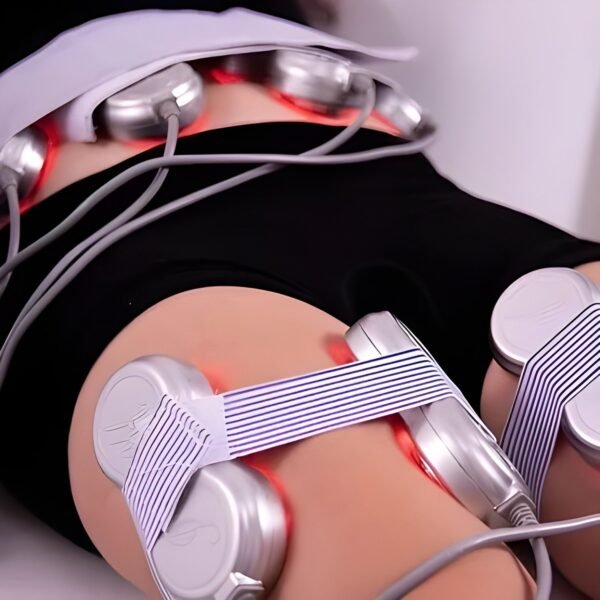
In short, EMS (Electrical Muscle Stimulation) sends low-frequency electrical pulses through a suit or pads directly into your muscle fibres, forcing them to contract far more intensely than voluntary movement alone. A trained practitioner guides you through simple, low-impact exercises while the current does the heavy lifting, quite literally activating a much higher percentage of muscle fibres than a standard workout.
That’s why a 20-minute session can feel more demanding than an hour at the gym, without the joint strain of heavy weights.
Does EMS Training Really Work?
Yes, and this isn’t just marketing talk. A systematic review and meta-analysis published on PubMed examined whole-body electromyostimulation across multiple controlled trials and found consistent improvements in body composition and muscle strength, particularly in adults who don’t train regularly. That’s genuinely reassuring if you’re someone who’s tried gyms before and found them hard to stick with.
How Often Should You Do EMS Training?
Most people see the best results with one to two sessions a week. Because EMS is so intense on the muscles, more isn’t automatically better; your body needs 48-72 hours to recover between sessions. Consistency over several weeks matters far more than frequency.
EMS Training and Non-Surgical Fat Removal
EMS isn’t a substitute for surgery, and any honest clinic will tell you that. What it does offer is genuine non-surgical fat removal support by building lean muscle, which raises your resting metabolic rate so your body burns more energy even at rest. Combined with our other treatments, it’s become one of the most requested options for the best non-surgical body sculpting UK clients ask about, particularly those wanting a firmer midsection without going under the knife.
Fat Freezing vs Ultrasonic Cavitation: Where Does EMS Fit In?
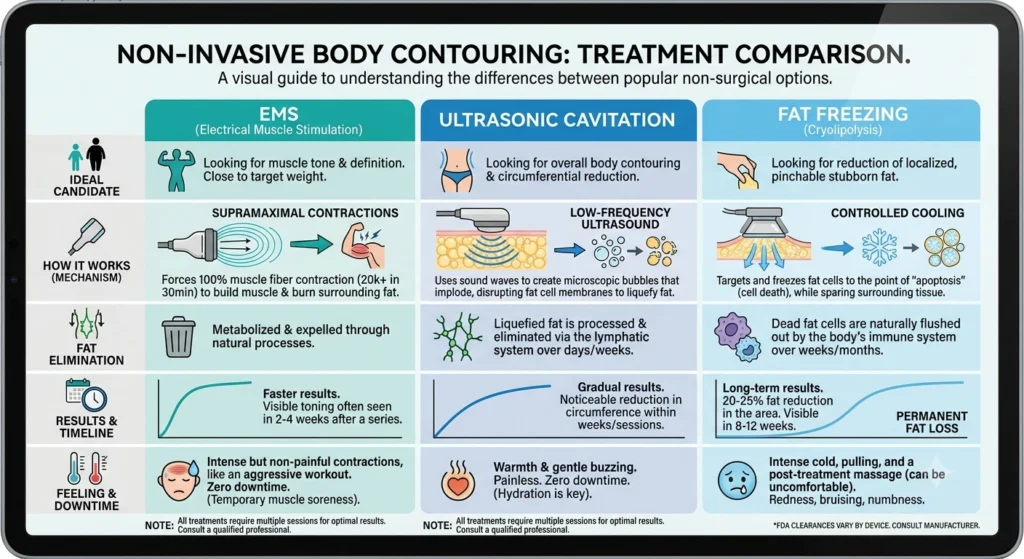
A question we hear constantly: fat freezing vs ultrasonic cavitation, which is better, and where does EMS come in? Fat freezing targets stubborn fat cells with cold temperatures; ultrasonic cavitation uses sound waves to break fat cells down so your lymphatic system can clear them naturally. EMS works differently again; it tones and strengthens the muscle underneath rather than targeting fat directly. Many of our Oldham clients combine EMS with our ultrasonic cavitation sessions for a more complete result.
And yes, is ultrasonic cavitation safe? When delivered by trained staff to appropriate candidates, it’s a well-established, non-invasive procedure with no recorded downtime.
Joint Pain Relief Treatments UK: Can Infrared Sauna Help Too?
If joints are a concern, you’re not alone. Many people ask us about joint pain relief treatments in the UK, and one gentle option we offer alongside EMS is infrared sauna therapy. Can an infrared sauna help with joint pain? The deep, soothing heat improves circulation and can ease stiffness, making it a popular pairing for clients who find high-impact exercise uncomfortable.
How to Tone Skin After Weight Loss
Lost weight and now dealing with looser skin? EMS is one of the more practical answers to how to tone skin after weight loss, since building the underlying muscle naturally firms the area above it. It won’t replace surgery for significant excess skin, but for mild to moderate laxity, it’s a realistic, non-invasive first step.
EMS for Real Life: Menopause, Over 40s & Plus Size Support
This is where EMS really earns its reputation. Struggling with weight loss for menopause in the UK due to hormonal shifts slowing your metabolism? Wondering how to lose weight after 40 in the UK when your body just doesn’t respond the way it used to? Or looking for genuine plus-size weight loss support in the UK without judgment? EMS is low-impact, adaptable to your fitness level, and doesn’t require you to lift heavy or run. It’s also a smart answer for anyone asking how to lose belly fat without surgery, since core activation is one of its biggest strengths. For general guidance on managing your weight safely alongside any treatment, the NHS weight management advice is a useful starting point.
Worth remembering too: according to the WHO obesity fact sheet, roughly 1 in 8 people globally live with obesity, which is exactly why so many of our clients are looking for realistic, low-impact options rather than extreme measures.
Find an EMS Training & Slimming Centre Near You in Oldham
Searching for “slimming centre near me” or specifically a weight loss clinic Oldham residents trust? Kenda Slimming Centre is based at 5 Prospect House, Featherstall Road, Oldham, with separate, private areas for men and women. We’ve supported clients across Greater Manchester since 2011, and our team will always talk you through what’s realistic before you book anything.
Frequently Asked Questions
Is EMS training safe for beginners?
Yes. Sessions are supervised, and intensity is adjusted to your fitness level, so it’s suitable even if you’ve never done structured exercise before.
What are the main EMS training benefits over a normal gym session?
Time efficiency and muscle activation. A 20-minute EMS session engages significantly more muscle fibres than an equivalent voluntary workout, which is ideal if you’re time-poor.
Can EMS training help with weight loss directly?
It supports weight loss indirectly by building muscle and boosting metabolism, but it works best alongside sensible eating habits, not as a replacement for them.
How soon will I see results from EMS training?
Most clients notice firmer muscle tone within four to six weeks of consistent weekly sessions.
Is EMS suitable if I have joint or back pain?
Often, yes, since it’s low-impact. We always recommend a quick consultation first to check it’s right for your specific condition.
Do I need to exercise elsewhere alongside EMS?
Not necessarily, though combining it with light walking or a balanced diet will accelerate results.
Final Thoughts
The real EMS training benefits come down to efficiency, low joint impact, and genuine, evidence-backed muscle results, not empty promises. Whether you’re managing menopause-related weight changes, recovering your confidence after 40, or simply want a smarter way to train, it’s worth a proper conversation before you decide. Book your free consultation at Kenda Slimming Centre Oldham, and we’ll map out what’s realistic for your body and goals.