
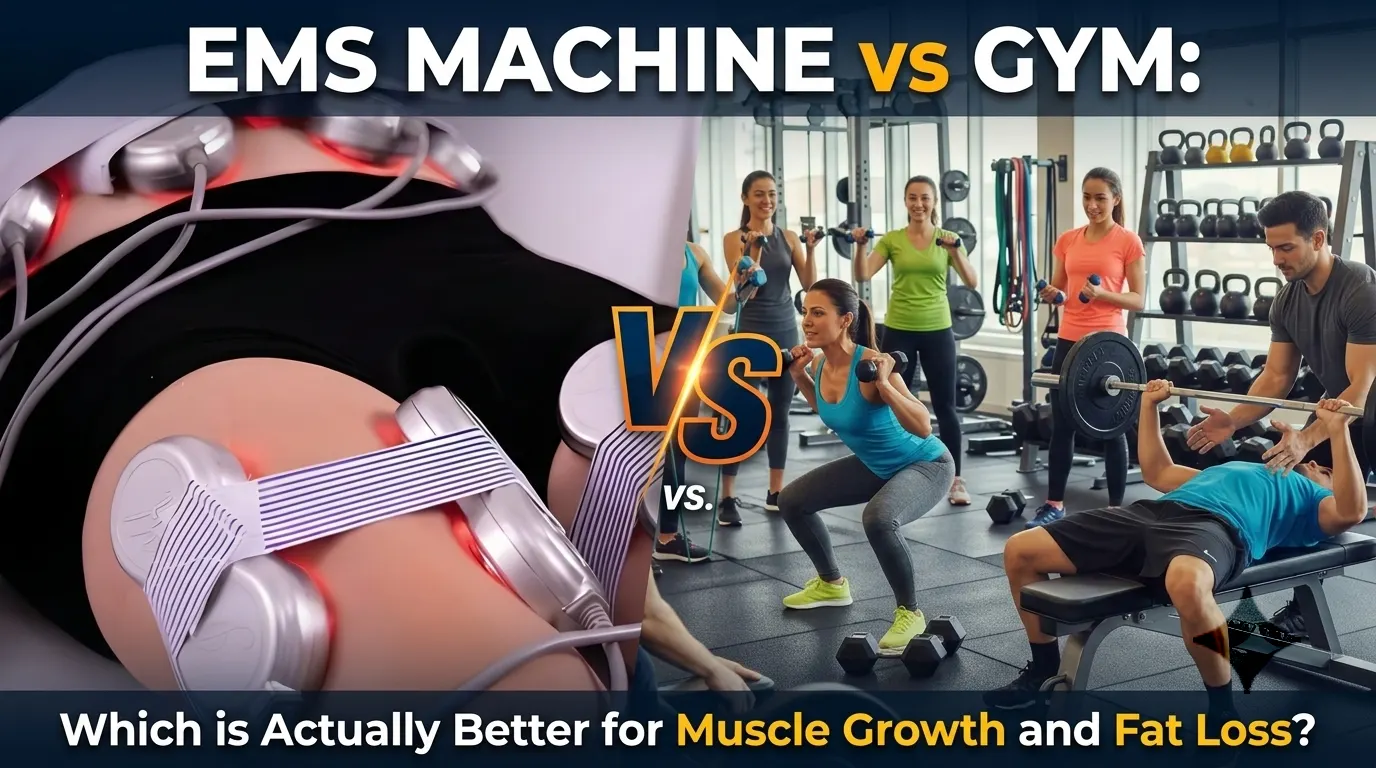
If you’ve been dragging yourself to the gym three times a week but still not seeing the results you want, you’re not alone. Thousands of people across Greater Manchester are quietly asking the same question right now: is there a smarter way to do this? According to the WHO, 1 in 8 people globally now lives with obesity, and most of them are trying to solve it with the gym alone.
That’s where the EMS machine comes in. Electrical Muscle Stimulation technology has gone from physio clinics and elite sports recovery rooms to mainstream wellness centres, and for good reason. But it doesn’t mean the gym is dead. Let’s have an honest conversation about both.
What Is an EMS Machine and How Does It Work?
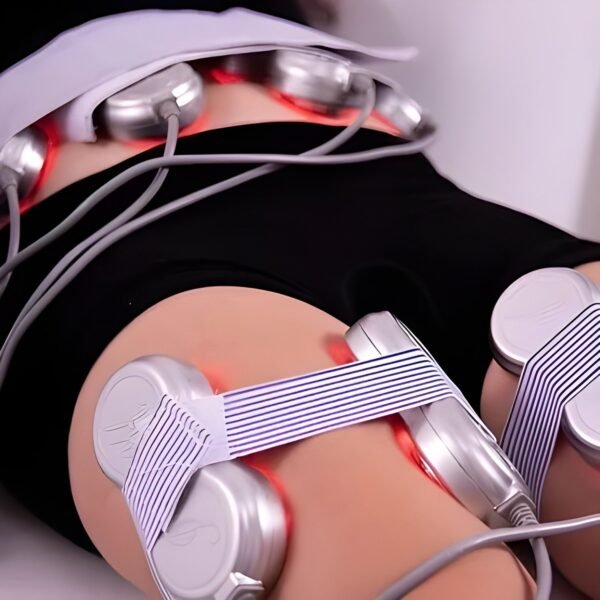
An EMS machine, short for Electrical Muscle Stimulation machine, sends low-frequency electrical impulses directly into your muscle fibres, triggering involuntary contractions. Think of it as your muscles doing a workout without your brain needing to send the signal.
During a typical gym session, you consciously engage around 30–40% of your muscle fibres. A professional EMS electric muscle stimulation unit, when used properly, can activate up to 90% of muscle fibres simultaneously. That’s not a marketing claim; it’s backed by research published in the Journal of Sports Science & Medicine.
At Kenda Slimming Centre in Oldham, the EMS sessions are guided by trained staff, ensuring correct electrode placement and intensity levels tailored to your body and goals. If you’re new to non-invasive treatments, their guide to non-invasive weight loss treatments in Oldham is a great starting point.
The Gym: What It Does Well
Let’s be fair. The gym isn’t going anywhere, and it shouldn’t. Weight training builds functional strength. Cardiovascular exercise strengthens the heart. Group classes improve coordination and discipline. And for many people, the gym is also a mental health tool: the routine, the community, the endorphins.
But here’s the honest truth most personal trainers won’t say out loud: the gym is incredibly time-inefficient for busy adults. A proper resistance session with warm-up, sets, rest periods, and cool-down takes 60 to 90 minutes. Multiply that by three or four sessions a week. That’s a part-time job.
And if you’re carrying an injury, managing a health condition, or simply find high-impact exercise painful? The gym can feel more like a barrier than a solution.
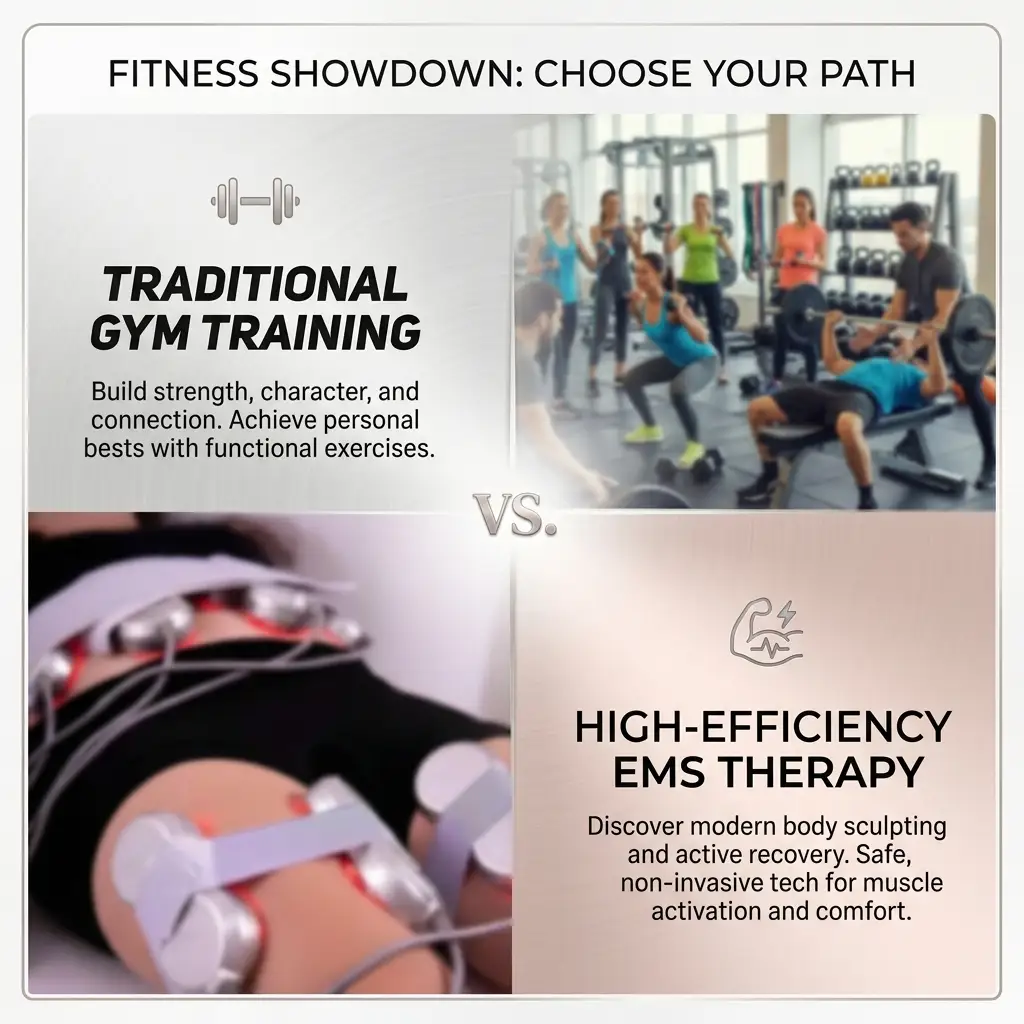
EMS vs Gym: The Head-to-Head Comparison
| Factor | EMS Machine | Traditional Gym |
|---|---|---|
| Session length | 20–30 minutes | 60–90 minutes |
| Muscle fibre activation | Up to 90% | 30–40% |
| Joint stress | Very low | Moderate to high |
| Calorie burn | Moderate + afterburn | Varies by effort |
| Suitable for injuries | Generally yes | Often no |
| Results timeline | 4–8 sessions | 8–12+ weeks |
The best EMS machine for muscle growth isn’t necessarily one you buy online and strap on at home; it’s a clinical-grade device used in a professional setting, with proper protocol and supervision.
Which Is Better for Fat Loss?
This is where it gets interesting. Fat loss ultimately comes down to a calorie deficit — that’s not controversial. But what people often underestimate is the role of muscle mass in long-term fat loss.
Muscle tissue burns more calories at rest than fat tissue. So when you increase your muscle mass — whether through gym work or EMS your basal metabolic rate goes up. You burn more calories even while sitting at your desk.
The muscle EMS machine treatments at Kenda combine electrical stimulation with infrared heat therapy, which clinical research shows can burn 300–600 calories per session while supporting the body’s natural fat mobilisation process. Pair that with ultrasonic cavitation in Oldham, and you have a powerful combination for targeting stubborn areas like the abdomen, thighs, and upper arms.
For someone who genuinely cannot exercise due to mobility issues, post-surgery recovery, or chronic joint pain, EMS isn’t just an alternative; it may be the only safe option available.
Who Should Consider an EMS Machine for Muscle Growth?
The EMS machine for muscle growth is particularly well-suited for:
- Busy professionals in Oldham and Manchester with limited time
- People recovering from injury who can’t perform traditional resistance training
- Women managing menopause-related muscle loss (sarcopenia is real and rarely talked about)
- Anyone who’s plateaued in the gym and needs a new stimulus
- Those who want to complement their existing training, not replace it
The NHS notes that maintaining muscle mass is one of the most effective ways to support long-term weight management and reduce the risk of type 2 diabetes and cardiovascular disease. EMS supports exactly that goal — and you can see real before-and-after results from Kenda clients on the website.
The Honest Answer: Do You Have to Choose?
No. And this is the part that often gets lost in the “EMS vs gym” debate.
The smartest approach for most people is a combination. Use the gym for cardiovascular health and functional movement. Use professional EMS sessions at a centre like Kenda to maximise muscle activation, accelerate recovery, and target body composition in ways a gym session simply can’t replicate.
Think of it this way: elite athletes have been using EMS for decades alongside their conventional training. They didn’t drop the gym. They added a tool that made everything else work better.
If you’re in or around Oldham and curious whether EMS could work for your specific goals, book a free consultation at Kenda Slimming Centre — no pressure, no hard sell, just an honest conversation about your goals and the right EMS and body contouring treatments for you.
What to Expect From Your First EMS Session
Most people are surprised by two things: how quick it is, and how they feel the next day.
A session typically lasts 20 to 30 minutes. You’ll feel the electrical pulses, some describe it as a firm tapping sensation, others as a deep muscular buzz. It shouldn’t be painful. Intensity is always adjusted to your comfort level.
The day after, especially if it’s your first session, you may feel the kind of DOMS (delayed onset muscle soreness) you’d associate with a hard gym workout. That’s your muscles responding. That’s the point.
Results with consistent use, typically 4 to 8 sessions over a few weeks, include improved muscle tone, reduced inches in targeted areas, and often better posture as the core muscles are engaged during treatment.
Frequently Asked Questions
Q: Is an EMS machine as effective as going to the gym?
EMS machines activate a significantly higher percentage of muscle fibres than conventional gym exercise (up to 90% vs 30–40%). For muscle activation and toning, EMS can be highly effective. However, the gym offers additional cardiovascular and functional benefits that EMS does not fully replicate. Many people use both together.
Q: How many EMS sessions do you need to see results?
Most people begin to notice visible changes in muscle tone and measurements after 4 to 6 sessions. For significant body composition change, a course of 8 to 12 sessions combined with consistent nutrition is recommended.
Q: Is EMS safe for people who can’t exercise?
Generally, yes. EMS is non-invasive and low-impact, making it suitable for people with mobility limitations, joint pain, or those in post-injury recovery. Always consult a qualified professional before starting, particularly if you have a pacemaker, are pregnant, or have certain medical conditions.
Q: What is the best EMS machine for muscle growth?
Clinical-grade EMS units used in professional wellness centres are significantly more powerful and precise than consumer home devices. For muscle growth and body contouring goals, a professionally supervised EMS session at a specialist centre will always outperform a home device.
Q: Can EMS help with belly fat?
EMS directly strengthens and tones the abdominal muscles. When combined with infrared heat therapy (as offered at Kenda), it can support fat mobilisation in targeted areas. It is not a standalone solution for fat loss, but as part of a broader lifestyle approach, it can be highly effective.
Q: How does EMS compare to EMSculpt?
Both use electrical muscle stimulation. EMSculpt is a specific branded medical device that uses HIFEM (High-Intensity Focused Electromagnetic) technology. Clinical EMS units at specialist centres use a different waveform. Both aim to achieve muscle contraction and toning, but differ in technology, intensity, and price point.
Q: Is EMS treatment available in Oldham?
Yes. Kenda Slimming Centre at 5 Prospect House, Featherstall Road, Oldham OL9 6HT offers professional EMS treatment as part of their non-invasive body contouring programme. Sessions are supervised by trained staff.
Q: Can I do EMS and gym training on the same day?
It’s generally advisable to space EMS sessions and intense gym workouts by at least 24 hours to allow for adequate muscle recovery. Your practitioner at Kenda will advise you based on your personal training schedule.